Blog
Egg Production: Market Direction, Production Choices and Agrotop’s Role
Egg production is one of the most established and reliable areas of animal protein. Eggs are used in households, foodservice, bakeries, hotels, restaurants, institutions and food processing. Demand is supported by nutrition, convenience, price and flexibility. In most markets, eggs remain a basic food item with strong daily demand.
Modern Egg Production
Modern egg production is becoming more complex. Customers are asking for different types of eggs. Each type requires a different production approach. The main categories are conventional eggs, cage-free barn eggs, aviary eggs, free-range eggs, organic eggs and processed egg products. The right system depends on the target customer. Also on local regulation, retail policy, land availability, labour cost, feed cost, biosecurity risk and the price premium that the market can support.
Retail markets are increasingly influenced by welfare standards, traceability, branding and consumer perception. Supermarkets often want consistent supply, clean packaging, reliable certification and a production story they can defend. Foodservice customers usually focus on reliability, egg size, delivery schedule and price stability. Processors need volume, hygiene, consistency and efficient logistics. Premium channels may support free-range or organic eggs. But these systems need the right land, brand, customer base and management capability.
Cage Free Productions
The move toward cage-free production is an important trend in many markets. In some countries it is driven by law. In others it is driven by retailers, international food companies or consumer pressure. Cage-free production can include barn, aviary and free-range systems. Each option has advantages and risks. Barn and aviary systems provide better environmental control and stronger biosecurity than outdoor systems. Free-range systems offer a stronger welfare image. But requires more land and more careful management of disease exposure, weather, parasites and flock behavior.
Feed remains the largest operating cost in egg production. Strong layer projects need a clear feed strategy. Whether through reliable suppliers, long-term contracts, integration with a feed mill, or careful purchasing arrangements. Labor is also critical. Cage-free systems need skilled daily management to control floor eggs, feather pecking, mortality, litter quality, bird movement, ventilation and flock uniformity.
Biosecurity has become a central part of layer farm design. Avian influenza and other disease threats affect project planning. Especially where outdoor access is involved. Farm layout, visitor control, water protection, staff movement, dead bird handling, cleaning, downtime and monitoring. They all need to be planned from the beginning.
Modern Egg Farms
Manure handling is another major issue. A modern egg farm produces a valuable fertiliser resource, but only if it is managed properly. Drying, composting, storage, odour control, fly control and nutrient use should be part of the project concept. Good manure planning improves environmental performance and can support the commercial model.
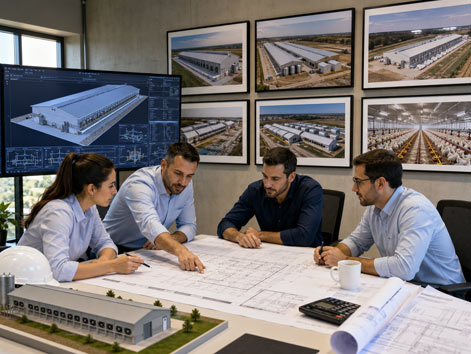
Agrotop can support customers by developing complete egg production projects. From concept to execution. This includes market review, production-system comparison, site planning, housing design, ventilation, climate control, automation, equipment selection, manure handling, biosecurity planning and project costing.
Commercial Target
Agrotop’s value is strongest where the customer wants a practical project. Not only a building. A layer farm must connect the commercial target with the technical design. The egg type, customer channel, expected price, production cost, welfare level, disease risk and environmental requirements. They all affect the final design.
For a customer considering investment, Agrotop can help define the project clearly: which eggs to produce, which customers to serve, what production system to use, what capacity to build. How to manage cost, and how to reduce long-term operational risk. The result is a project that is planned around the real market and built with professional poultry engineering.
The strongest layer investments will be those that combine efficient production, market acceptance, good animal welfare, strong biosecurity and disciplined cost control. Agrotop can bring these elements together in a complete turnkey project designed for long-term commercial performance.