Blog
Processing Creates the Value — Farms Make It Possible
Poultry house construction
Australia’s chicken meat industry is one of the country’s quiet economic successes. A recent report by Deloitte Access Economics, prepared for AgriFutures Australia and published in 2025, puts hard numbers behind what industry participants already know: the sector is large, resilient, and growing. In 2022–23 alone, Australia’s chicken meat industry contributed around A$8 billion to the national economy and supported more than 52,000 jobs across poultry farming, processing, and associated supply chains.
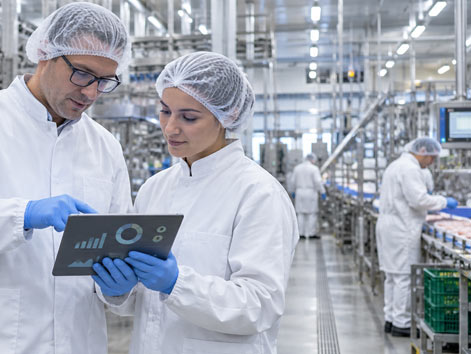
One finding in the report is especially important for anyone involved in production planning and capital investment. Around 85% of the industry’s added economic value is generated at the processing stage, not on the farm. Processing plants concentrate labour, technology, logistics, and value-added activities such as cutting, further processing, packaging, and distribution.
At first glance, this might suggest that growing is the smaller part of the story. In practice, the opposite is true.
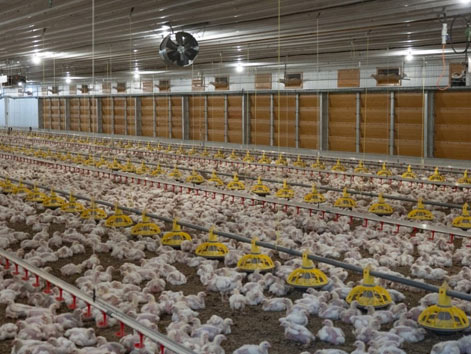
Processing only works — and only achieves maximum value — when farms perform precisely. Birds must arrive on schedule, at the correct weight, and with consistent quality. Variability at farm level immediately translates into lost yield, reduced throughput, higher costs, and missed market commitments at the processing plant. The report highlights that the strength of the Australian chicken meat industry lies in its highly integrated production model, where every stage depends on the performance of the one before it.
Poultry house construction In simple terms:
Processing creates the value, but farms make that value possible.
This reality places growing systems under increasing pressure. As demand continues to rise and margins tighten, processors need predictability. That requires housing systems that deliver stable environmental conditions, good bird welfare, low mortality, and uniform outcomes across every production cycle. Poorly designed or outdated sheds are no longer just a farm-level issue; they represent a system-level risk.
This is where infrastructure becomes strategic.
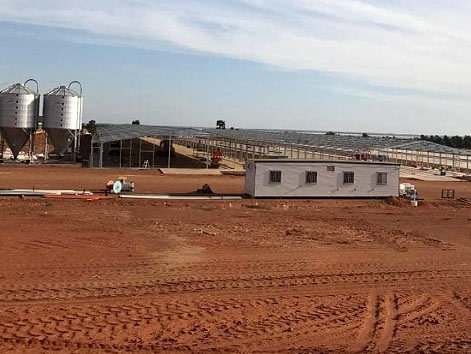
Agrotop specialises in poultry house construction. High-performance broiler housing and high-welfare layer housing, delivered turnkey. With more than 35 years of global experience, Agrotop designs poultry houses as integral components of an overall production system rather than as stand-alone buildings. Poultry house construction includes: Ventilation, climate control, bird density, workflow, biosecurity, and future expansion are engineered together to support consistent, repeatable results flock after flock.
For processors, this consistency helps protect downstream value. For growers, it delivers greater operational control, improved performance, and compliance with increasingly demanding welfare and environmental standards. And for integrators, it reduces operational risk across the entire production chain by enabling predictability where it matters most — at farm level.
Australia’s chicken meat industry has demonstrated its economic importance. The next phase of growth will depend less on demand — which remains strong — and more on execution. Farms that can consistently deliver birds exactly as processors require will underpin the sector’s ability to continue growing efficiently and sustainably.
In that context, poultry house construction is not simply a decision. It is a production decision, a risk management decision, and ultimately a value decision. Agrotop’s role is to help producers get that decision right by delivering housing solutions that allow the entire system to perform at its best.
Author Bio
Stanley Kaye
International Business Development
Stanley Kaye brings more than 30 years of hands-on experience in the poultry industry & poultry house construction. Combining practical knowledge as a broiler grower with extensive experience as a consultant and business development professional. He specialises in the international development and marketing of turnkey poultry solutions and sustainable agricultural projects.
Stanley manages key projects primarily across Asia and the Pacific region, applying deep industry insight to deliver customised, efficient, and commercially viable solutions. His expertise includes market analysis, client relationship management, and the development of long-term strategic partnerships. He believes that integrity, clear communication, and a strong understanding of local conditions are essential to building successful and enduring global business relationships.
Reference
Deloitte Access Economics (2025). Economic contribution of Australia’s chicken meat industry, 2022–23. Prepared for AgriFutures Australia. Available at: https://agrifutures.com.au