Blog
How to Choose Your Layer Welfare Standard: Cage, Cage-Free, or Free-Range
By Stanley Kaye , M.B.A. Agrotop Business Development
For a commercial egg producer, the choice between cages, cage-free barns, and free-range is mostly an economic decision, not a moral slogan. Each system is a different business model, with its own capital costs, land needs, operating risks, and market opportunities.
This article sets out a practical framework for deciding which welfare standard to adopt today – and how to protect yourself against market changes over the next 5–10 years.
Know What You’re Comparing
In modern Poultry Farming, the three main systems are:
- Cage (enriched/colony cages)
Hens are housed in multi-tier cages inside climate-controlled houses. Birds have limited movement but enjoy stable conditions and very efficient Egg Production per square meter. Cages minimize land use and make management predictable. - Cage-free (barn/aviary)
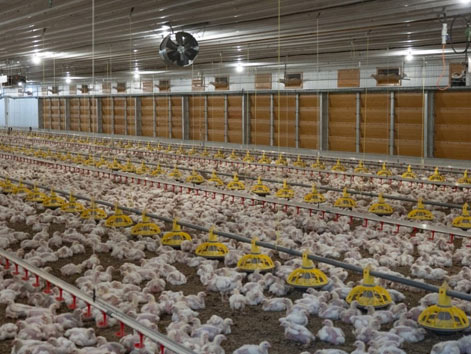
Hens are loose inside the house, sometimes in multi-level aviary systems. No cages, but no outdoor access. Birds can perch, scratch and move more freely, which improves welfare compared with cages but increases space and management needs.(ABC) - Free-range – Cage-free poultry farming
Hens live in barns with access to outdoor ranges. This is usually the highest welfare perception in the market. But it demands much more land, more fencing and biosecurity, and is more exposed to climate and disease risks.
The Hard Numbers: Cost and Land
The main reason most of the world still uses cages is simple: they are cheaper per egg and per hectare.
- Capital cost per hen
Studies comparing cage and non-cage systems consistently show 20–70% higher farm-level production costs for non-cage (barn or free-range) systems versus modern cages, driven by buildings, equipment, labor, and management complexity. (ResearchGate) - Land requirement
Cages: highest stocking density, minimal land per hen.
Cage-free barns: lower density in the house, so more floor area and often larger plots.
Free-range: the biggest jump. Outdoor access rules (e.g. birds per m² of range) mean your land requirement can multiply several times compared with cages.
You must translate these differences into cost per egg over the full economic life of the facility, including:
- Buildings and equipment.
- Land or lease costs.
- Labor and management.
- Feed and mortality (often higher in free-range).
Look at Your Market Today – Cage Free Poultry Farming
You are not selling “welfare.” You are selling eggs into a specific market structure. Start by mapping:
- What do your current buyers actually pay for?
If most of the volume is still standard cage eggs with minimal premium, a sudden move to 100% free-range may destroy your margins.
If retailers or foodservice chains already pay a clear premium for Cage Free Eggs or free-range, the extra capex might be justified.(Virtue Market Research) - What are the legal requirements?
The EU has banned conventional battery cages and only allows enriched cages or non-cage systems, and several countries have announced further phase-outs.(Wikipedia)
Some US states and other jurisdictions now require all eggs sold to be cage-free, pushing producers away from cages even if they are cheaper.(Axios) - What are your customers promising?
Many global retailers and restaurant chains (e.g. Walmart, Subway and others) have pledged to go 100% cage-free by around 2025–2030.(nationalaglawcenter.org)
In 2025, around 92% of global corporate cage-free poultry farming commitments with 2024 deadlines had already been fulfilled, and nearly half of US hens are already in cage-free housing. (Sustainable Food Business)
Free Cage Poultry Farming – Think 5–10 Years Ahead
Egg demand is projected to keep growing globally, especially in Asia and Africa, but the mix of welfare standards is shifting. (Rabobank)
- The cage-free egg market is growing faster than the overall egg market, at roughly 5–7% CAGR. (marketresearchfuture.com)
- Animal-welfare NGOs are focusing on corporate and legal bans of cages, not on free-range versus barn.
- Once a retailer switches its brand to cage-free, it almost never goes back to cages – the direction of travel is one-way.
- Will my core customers still accept cage eggs in 2035?
2. If they demand at least cage-free, can my current cages be converted, or will I need to rebuild?
3. If I go free-range, is the price premium large and stable enough to cover the extra land and risk?
A Practical Decision Framework
simple way to structure the decision:
Baseline: full cage scenario
Calculate cost per egg and expected selling price for a modern enriched-cage project with today’s buyers.
Cage-free scenario
Model the higher capex and opex, and the price premium you can realistically secure from retailers or brands that advertise “cage-free.”
Free-range scenario
Add land purchase/lease, fencing, range management, and higher biosecurity costs.
Only accept this scenario if there is a clear, stable brand and price premium and you truly have the land.
Stress test under future market shifts
Assume in 5–10 years that:
- A portion of your current buyers require at least cage-free.
- some retailers move to free-range or mixed welfare tiers.
- Which system leaves you with the lowest stranded-asset risk and the most flexibility?
Consider hybrid and phased strategies
- Start with cage-free barns designed so some units can be upgraded to free-range later.
- Keep a portion of production in lower-cost cages (where legal) for bulk buyers, and a growing share in cage-free for premium contracts.
Role of Design and Partner Choice
Whatever welfare standard you adopt, most of your economic result will still come down to basics:
- sound building design for your climate.
- reliable ventilation and micro-climate.
- efficient egg collection and packing.
- robust biosecurity.
This is where a design-and-build partner such as Agrotop adds value: by engineering cage, cage-free or free-range systems that fit your market, land, and regulation today, but leave room to move as welfare expectations rise.
The welfare label you choose is a business strategy, not just a moral stance. Take it as seriously as any other long-term investment decision.